
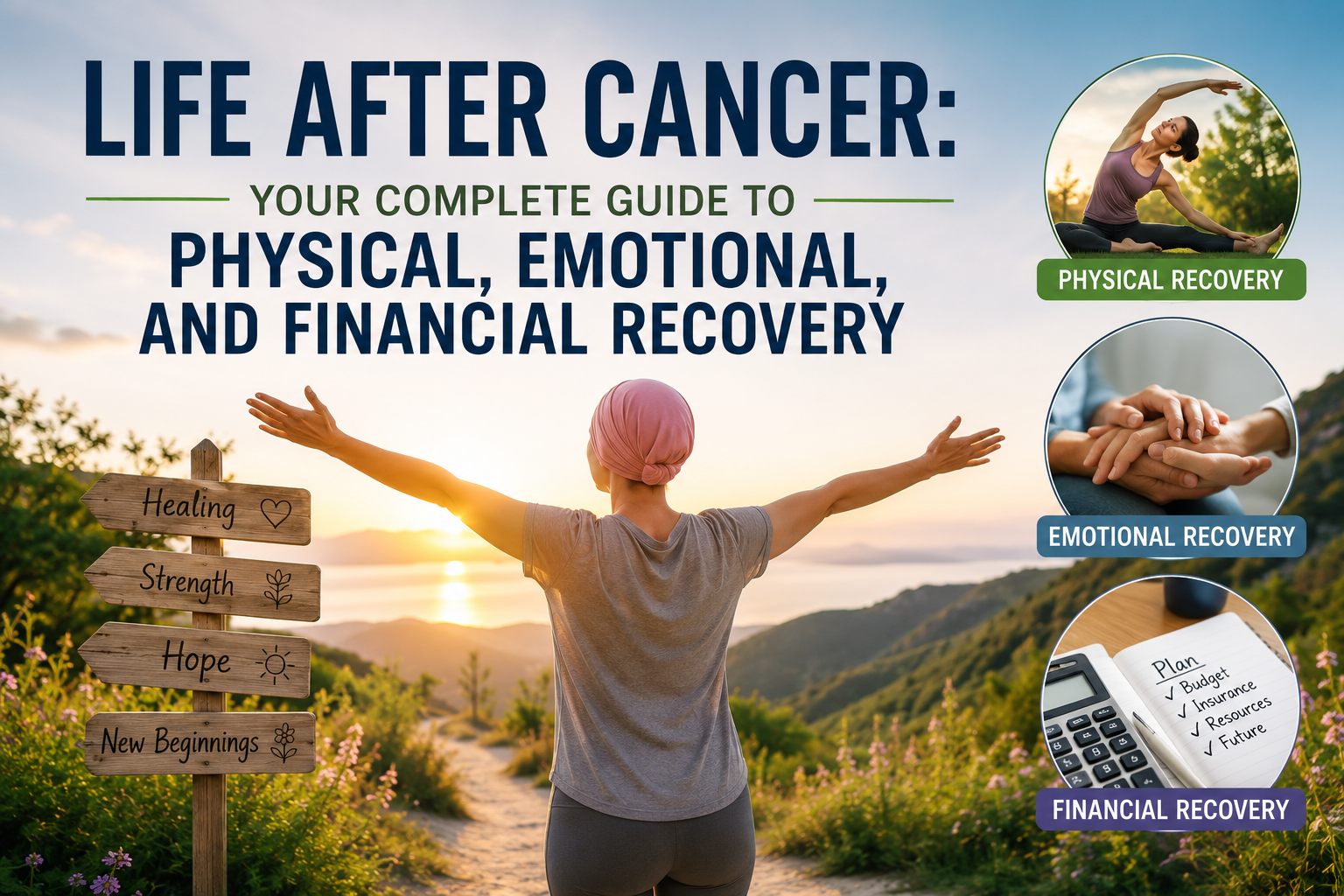
Life After Cancer: Your Complete Guide to Physical, Emotional, and Financial Recovery
Life After Cancer: Your Complete Guide to Physical, Emotional, and Financial Recovery
Finishing cancer treatment is a milestone that comes with complex emotions. Relief, gratitude, and hope often mix with fear, uncertainty, and exhaustion. Many survivors describe a sense of being dropped from the intensive support system of treatment — suddenly, the appointments are less frequent, and you are expected to return to normal life. But nothing feels completely normal yet.
This guide is for cancer survivors navigating the road that comes after treatment. Whether you finished treatment last week or several years ago, you will find practical guidance for rebuilding your health, processing your emotions, managing the financial aftermath, and creating a fulfilling life beyond cancer.
The Emotional Reality of Cancer Survivorship
There is an expectation that finishing cancer treatment should feel purely celebratory. In reality, many survivors feel a confusing mixture of emotions that can include anxiety about recurrence, grief for the life they had before diagnosis, guilt (especially among survivors who know others who did not make it), depression, and a lost sense of identity now that being a “cancer patient” is no longer the central focus of daily life.
All of these feelings are normal and valid. Research shows that up to 40% of cancer survivors experience significant anxiety and depression after treatment ends. If you are experiencing these feelings, you are not alone and you are not failing at survivorship.
Fear of recurrence — the worry that cancer will come back — is one of the most common and challenging aspects of survivorship. This fear is rational; it comes from a very real experience. Managing it does not mean making the fear disappear, but rather learning to live alongside it without letting it consume your daily life.
Talking to Your Healthcare Team About Survivorship
After active treatment ends, you will transition to a survivorship care plan. This document, typically created by your oncology team, outlines your treatment history, potential long-term and late effects of treatment, a schedule for follow-up visits and surveillance, health promotion recommendations, and information about community resources.
If you have not received a survivorship care plan, ask your oncologist or primary care doctor for one. Having a clear plan reduces anxiety and ensures nothing falls through the cracks in your ongoing care.
Follow-up appointments vary based on cancer type and treatment. Most survivors have more frequent monitoring in the first two to five years, then transition to annual check-ups. Understanding your surveillance schedule helps you feel proactive about monitoring your health rather than passively waiting and worrying.
Physical Recovery After Cancer Treatment
Cancer treatments — surgery, chemotherapy, radiation, immunotherapy — take a significant toll on the body. Physical recovery is often slower than survivors expect, and some effects persist long-term. Common physical challenges include:
Fatigue: Cancer-related fatigue is different from ordinary tiredness. It can persist for months or years after treatment. It does not always improve with sleep. Gentle, consistent exercise is one of the most effective treatments — even a 15-minute daily walk can help. Pace yourself and rest without guilt.
Cognitive changes (“chemo brain”): Many survivors experience memory problems, difficulty concentrating, and mental fogginess after treatment. This is a recognized medical condition, not a personal failing. Most people see improvement over time. Mental exercises, adequate sleep, regular physical activity, and managing stress all support cognitive recovery.
Pain and physical discomfort: Neuropathy (nerve pain or numbness), joint pain, lymphedema, and scar tissue discomfort are common after-effects. Work with your healthcare team to manage these symptoms. Physical therapy, occupational therapy, and pain management specialists can provide significant relief.
Sexual and reproductive health: Cancer treatment can affect hormonal function, fertility, sexual desire, and sexual function. These are important quality-of-life issues that deserve medical attention. Do not hesitate to discuss them with your healthcare team or ask for a referral to a specialist.
Immune function: Some treatments, particularly chemotherapy, can temporarily suppress the immune system. Follow your healthcare team’s guidance on vaccinations, infection prevention, and when it is safe to resume normal activities.
Exercise and Nutrition for Cancer Survivors
Research consistently shows that regular exercise after cancer treatment reduces the risk of recurrence for several cancer types, improves quality of life, reduces fatigue, and improves mental health. The American Cancer Society recommends at least 150 minutes of moderate exercise per week for cancer survivors.
Start where you are, not where you were. If fatigue limits you to 10-minute walks, start there and build gradually. Working with a physical therapist or exercise oncologist who specializes in cancer recovery can help you develop a safe, effective program tailored to your specific situation.
Nutrition also plays an important role in recovery and reducing recurrence risk. A plant-rich diet emphasizing vegetables, fruits, whole grains, and legumes is associated with better outcomes for many cancer types. Limit red and processed meats, alcohol, and ultra-processed foods. Work with a registered dietitian who specializes in oncology nutrition for personalized guidance.
Mental Health Support for Cancer Survivors
Seeking mental health support after cancer is not weakness — it is wisdom. Cancer is a traumatic experience that deserves dedicated psychological support. Options include:
Individual therapy with a therapist experienced in health psychology or cancer. Cognitive-behavioral therapy (CBT) is particularly effective for fear of recurrence and cancer-related anxiety. Cancer support groups — in person or online — connect you with others who truly understand what you are going through. The shared experience can be profoundly validating and healing. Many cancer centers offer free support groups. Check with your treatment center or the American Cancer Society for options in your area.
Mindfulness-based programs have strong evidence for improving quality of life in cancer survivors. Apps like Headspace and Calm offer accessible mindfulness practices, and many cancer centers offer in-person MBSR (Mindfulness-Based Stress Reduction) programs.
Navigating the Financial Aftermath of Cancer
Cancer is one of the most financially devastating diagnoses. Even with insurance, out-of-pocket costs can reach tens of thousands of dollars. Many survivors emerge from treatment with significant debt, depleted savings, and in some cases, employment challenges from extended time away from work.
If you are struggling financially after cancer, you are not alone and there are resources to help:
Patient advocacy organizations: Many cancer-specific organizations offer financial assistance programs. The Patient Advocate Foundation helps navigate insurance issues and provides copay relief. The Cancer Care organization offers limited financial assistance and connects survivors with other resources.
Pharmaceutical assistance programs: If you continue on maintenance medications, contact the manufacturer directly about patient assistance programs. Many pharmaceutical companies provide free or reduced-cost medications to eligible patients.
Hospital financial counselors: Most hospitals have financial counselors who can review your bills for errors, apply for charity care programs, set up payment plans, and connect you with other assistance resources. This service is free — take advantage of it.
Social Security Disability Insurance (SSDI): If cancer or its treatment has left you unable to work, you may qualify for SSDI. The Social Security Administration has a compassionate allowance program that fast-tracks many cancer diagnoses.
Returning to work: Many survivors face challenges returning to their previous employment due to physical limitations, discrimination, or the need for schedule flexibility for ongoing medical appointments. The Americans with Disabilities Act (ADA) may entitle you to reasonable workplace accommodations. A cancer financial navigator or social worker can help you understand your rights.
Rebuilding Relationships and Social Life
Cancer changes relationships. Some relationships grow stronger through the experience. Others become strained as people who have not experienced serious illness struggle to understand what you have been through. Some survivors feel isolated because the people around them want to “move on” while they are still processing.
Be honest with the people in your life about where you are emotionally. Give friends and family specific ways to help. Let go of relationships that drain you and invest in those that sustain you. Finding community with other survivors — through support groups, online communities, or cancer-focused events — can provide a sense of belonging that those who have not had cancer cannot fully replicate.
Finding Meaning After Cancer
Many survivors describe cancer as profoundly life-altering in ways that ultimately proved positive — a clarification of what truly matters, a deepening of relationships, a shift in priorities. Post-traumatic growth is a recognized psychological phenomenon where people report positive psychological change as a result of struggling with difficult life events.
Cancer may have changed your plans, your body, and your perspective on life. Give yourself time and space to discover what your new normal looks and feels like. You do not have to have it figured out right away. Recovery is not a straight line, and there is no deadline for how long it is supposed to take.
You Are More Than Your Diagnosis
Life after cancer is yours to define. With the right support — medical, emotional, financial, and social — you can build a life that honors your experience and moves forward with hope, purpose, and resilience. You have already shown extraordinary strength. That strength does not disappear when treatment ends. It carries you forward.