The Day I Finished Cancer Treatment — And Why It Was the Strangest Day of My Life
My last chemotherapy infusion was on a Wednesday in October. The nurses brought out a little bell — it is a tradition at many cancer centers, ringing a bell when you finish treatment — and my husband was there, and a few of the nurses I had come to know over the months, and I rang it and everyone clapped and I smiled for the photos.
And then we drove home and I sat on the couch and felt something I had not expected at all. Not relief. Not joy. Something closer to being untethered.
Nobody had warned me about this, which is part of why I am writing it.
Disclaimer: This is personal experience, not medical advice. If you are experiencing significant emotional distress after cancer treatment, please speak with your oncology team or a mental health professional.
Why Everyone Expects You to Be Simply Happy
The cultural script for finishing cancer treatment is clear: treatment was bad, finishing treatment is good, therefore finishing treatment should make you feel good. The people who love you have been waiting for this moment. They have held their breath through your diagnosis and your treatment, and they need you to be okay. Their relief is real and it comes out as celebration.
None of this is wrong. The people around me were genuinely and justifiably relieved and happy. The problem was that I did not feel the way I was supposed to feel, which added guilt to the strangeness. I was grateful — deeply grateful — and also scared, and also grieving something I could not quite name, and also exhausted in ways that went beyond physical.
The Fear That Gets Louder When Treatment Ends
During treatment, I saw my oncologist every three weeks. I had blood tests regularly. If something was going wrong, the medical system was right there watching. The structure of treatment, as brutal as it was, provided a kind of terrible safety. I was in the system. I was being monitored.
When treatment ended, the next appointment was in three months. Three months. The calendar was suddenly vast and unmonitored. What if the cancer was growing somewhere and no one was checking? This fear — fear of recurrence — is so common among survivors that oncology researchers have a name for it. It is not irrational. It is a completely understandable response to having survived something that tried to kill you.
What I did not know at the time is that this fear is almost universal among cancer survivors and that there are genuinely effective ways to manage it. Not eliminate it — manage it. That distinction matters.
The Identity Question — Who Are You After Cancer?
Cancer changes you. That sounds like a cliche and it is also true in ways that are hard to articulate until you have lived it. My relationship with my body changed. My relationship with time changed — I thought differently about the future in ways that did not simply reverse when treatment ended. My sense of what mattered, who I wanted to spend time with, how I wanted to spend that time — all of it had shifted.
The person who walked out of that infusion center on the last day was not the same person who had walked in on the first day. That is not a tragedy — growth rarely is. But it requires adjustment. The life you had before cancer was built around a version of you that has genuinely changed. Some of what you built still fits perfectly. Some of it needs to be reconsidered.
The Physical Reality That Does Not Magically Resolve
I had thought somewhere in the back of my mind that when treatment ended I would start feeling better relatively quickly. That is not what happened. My body had been through months of chemotherapy. The fatigue did not lift the day after my last infusion. The cognitive changes — the brain fog, the difficulty finding words, the way complex tasks required more effort — those continued for months.
This was disorienting. I was supposed to be done. I was supposed to be getting better. Instead I still felt terrible, except now without the structure and support of active treatment surrounding me. Without a medical team seeing me every few weeks. Without the role of cancer patient that, strange as it sounds, had organized my daily life and given it a kind of clarity of purpose.
What Helped — Honestly
Talking to other survivors helped more than anything else. Not because they had solutions — they mostly did not — but because they understood without explanation. The relief of being in a room with people who had felt exactly what I was feeling, without having to justify or explain it, was profound.
A therapist who had worked with cancer patients specifically helped me develop strategies for managing the fear of recurrence — learning to notice when my mind was catastrophizing and interrupt the pattern. This was more practical and more effective than I expected therapy to be.
Very gentle physical activity helped my body begin to recover and gave me agency over my physical experience after months of having things done to my body. Even short walks when I had energy for them made me feel like a person with a body rather than a body being managed.
Time helped. This sounds unhelpful because it is not something you can do, but it is true. The strangeness of the transition period does not last forever. Most survivors find that the acute disorientation of the first months after treatment settles into something more livable as a new normal gradually takes shape.
What I Would Tell Someone Ringing That Bell Today
It is okay if the bell-ringing is complicated. It is okay if you feel relief and fear at the same time. It is okay if you do not feel like celebrating and also if you celebrate wholeheartedly and then feel scared again later that day. There is no correct emotional response to finishing cancer treatment.
The people who love you will need to see you doing okay. They cannot always sit with the complexity of what you are actually experiencing. That is not abandonment — it is human limitation. Find the other survivors. Find the therapist who understands this. Give yourself time.
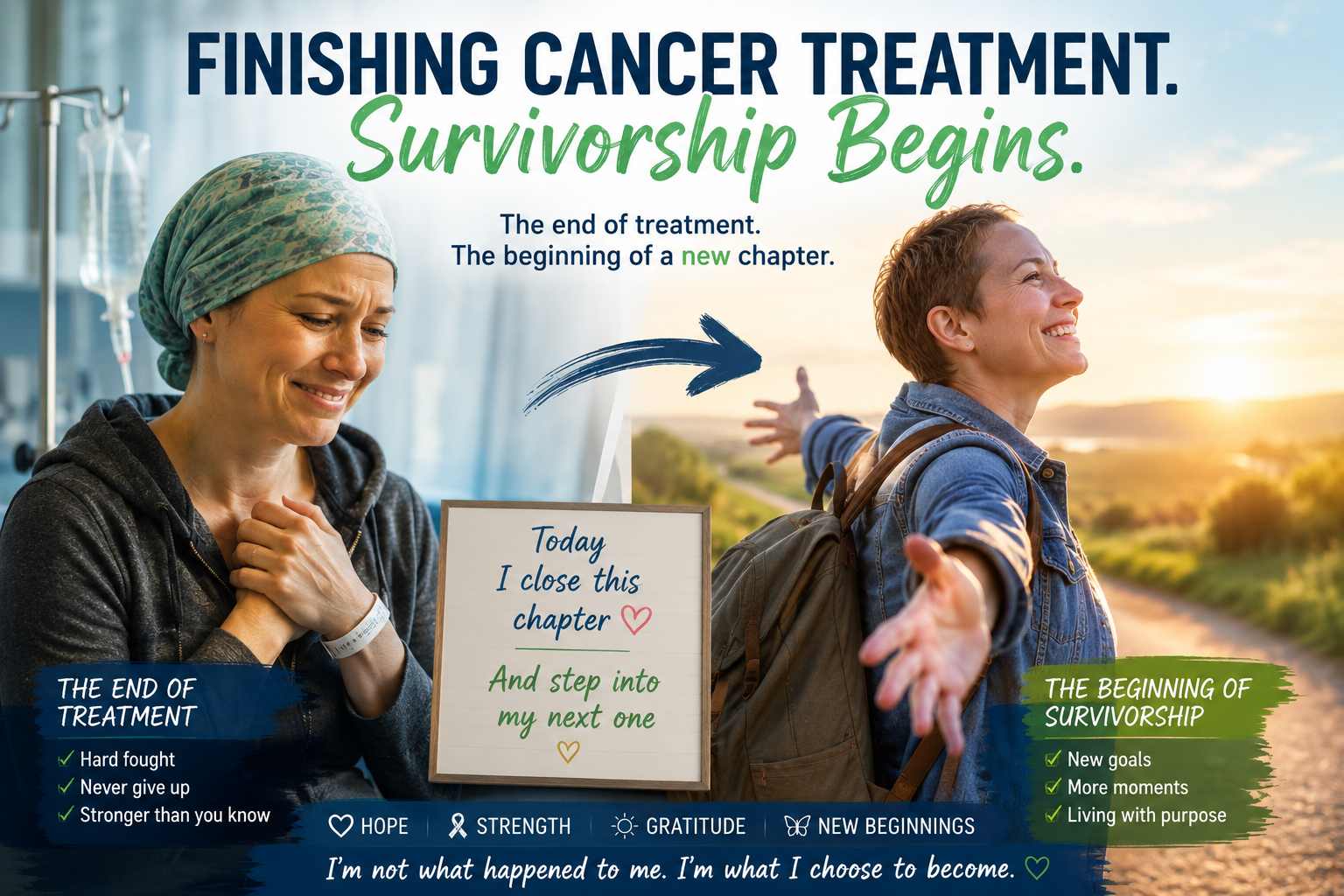
The end of treatment is not the end of the cancer experience — it is the beginning of a different chapter of it. And that chapter, while often hard, genuinely gets better.
Frequently Asked Questions
Is it normal to feel depressed after finishing cancer treatment? Yes, very common. Studies show significant rates of depression and anxiety in the immediate post-treatment period. If these feelings are persistent or severe, please discuss them with your oncology team.
How long does the emotional difficulty after treatment typically last? It varies enormously. Most survivors report the acute disorientation lasting weeks to a few months. Longer-term adjustment to life after cancer is an ongoing process.
Where can I find other cancer survivors to talk to? The Cancer Support Community at cancersupportcommunity.org offers free support groups nationally. Many cancer centers have survivor programs. Online communities exist for specific cancer types.
Conclusion
Finishing cancer treatment is genuinely something to celebrate. It is also something to grieve, something to fear, something to adjust to, and something that looks different from inside than it looks from outside. Give yourself full permission to feel whatever you actually feel. Find people who understand. Be patient with yourself and with the people who love you. And know that the complicated disorienting period after treatment, as hard as it is, is part of the path — not a detour from it.