
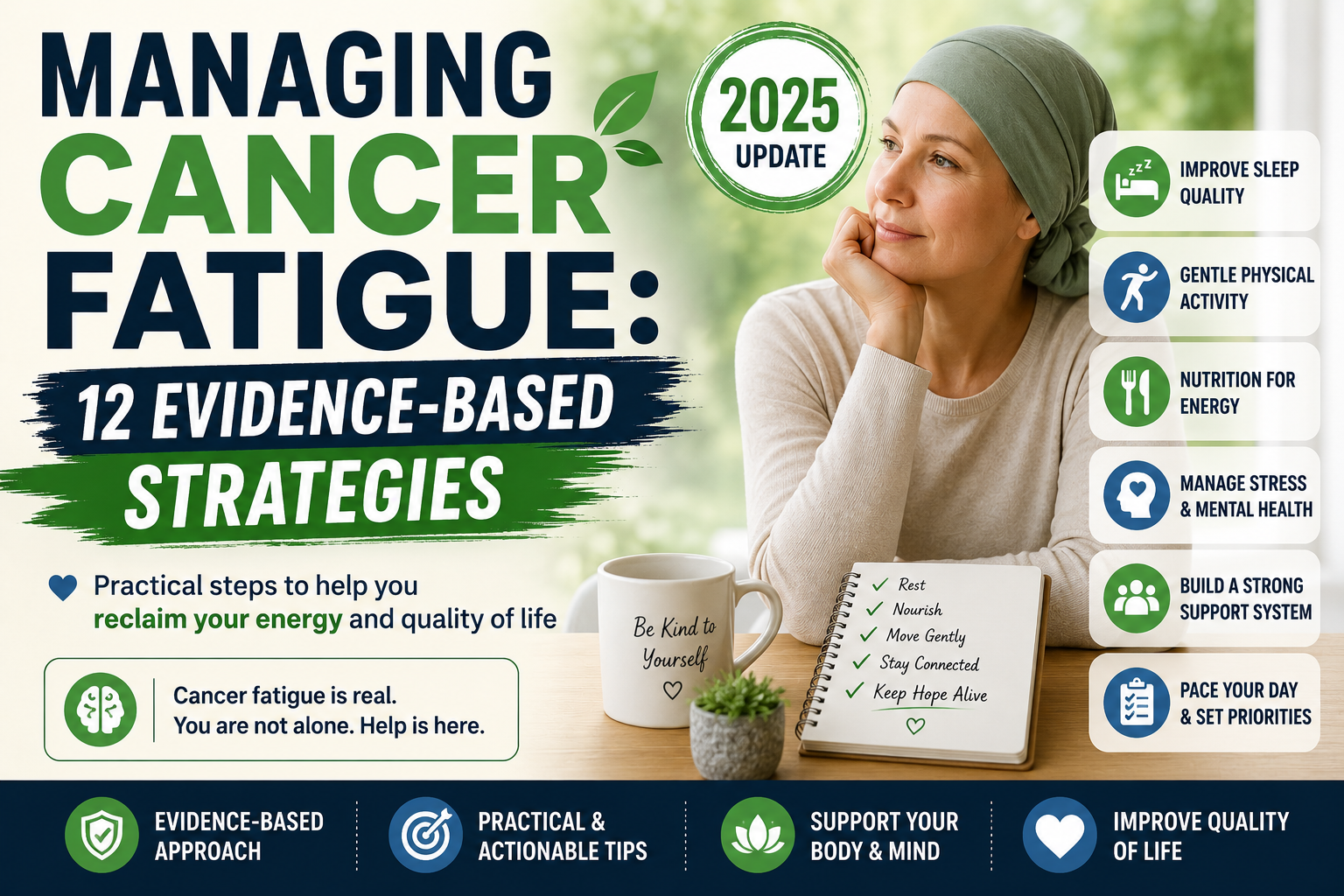
Managing Cancer Fatigue: 12 Evidence-Based Strategies 2025
70% — Cancer survivors experiencing significant fatigue during and after treatment (NCI)
#1 — Cancer-related fatigue is the most common and distressing symptom reported by cancer survivors
30 min — Minimum daily moderate exercise shown to significantly reduce CRF in multiple studies
6–12 mo — Typical timeframe for meaningful fatigue improvement post-treatment for most survivors
35% — Reduction in fatigue severity achieved through structured exercise programs (Cochrane Review 2019)
Why Cancer-Related Fatigue Is Different
Cancer-related fatigue (CRF) is not the same as ordinary tiredness. Unlike regular fatigue, CRF doesn’t resolve with rest, often has no obvious relationship to activity level, and can profoundly limit daily functioning. A 2024 NCI report confirmed that 70% of cancer survivors experience significant CRF, making it the most commonly reported and most distressing symptom in cancer survivorship.
The cause is multifactorial: treatment effects on red blood cells and mitochondria, immune system activation, hormonal changes, disrupted sleep, depression, and deconditioning from reduced activity during treatment. Effective management requires addressing multiple factors simultaneously — not just resting more.
12 Evidence-Based Strategies That Actually Work
1. Exercise — The Most Powerful Intervention
Counterintuitively, exercise is the most evidence-supported treatment for CRF. A 2019 Cochrane Review of 136 studies found that aerobic exercise and resistance training both significantly reduce fatigue severity and improve quality of life. Start with 10–15 minutes of walking daily and increase gradually. The goal is consistent moderate activity, not intensity.
2. Energy Conservation and Pacing
Plan your day around your peak energy windows (usually morning for most people). Use the energy envelope approach: stay within 70% of your energy capacity to avoid boom-bust cycles. Prioritize activities by importance and delegate or eliminate lower-priority tasks. Keep a fatigue diary for one week to identify your personal energy patterns.
3. Sleep Hygiene Optimization
Cancer treatment frequently disrupts sleep architecture. Strategies that specifically help cancer survivors: maintain consistent wake times (even when tired), limit naps to 20 minutes before 3pm, reduce screen exposure 90 minutes before bed, keep the bedroom cool (65–68°F), and address pain or other symptoms that interrupt sleep with your oncologist.
4. Treat Underlying Contributors
Fatigue has treatable contributors that are often missed: anemia (a blood test confirms this and iron supplementation or erythropoietin may be prescribed), hypothyroidism (common after certain treatments — a simple blood test), vitamin D deficiency (very common in cancer survivors), and depression (which dramatically amplifies fatigue perception and is very treatable).
5. Cognitive Behavioral Therapy (CBT) for Fatigue
CBT specifically adapted for cancer-related fatigue has strong evidence — a 2017 Lancet Oncology study found CBT reduced fatigue severity by 35% compared to standard care. It works by changing unhelpful thought patterns about fatigue and developing better coping and activity patterns. Many cancer centers offer CBT for survivorship; telehealth has made it more accessible.
6. Mind-Body Practices: Yoga and Mindfulness
Multiple RCTs have found yoga specifically reduces cancer-related fatigue. A 2012 Journal of Clinical Oncology trial of 410 survivors found that those doing twice-weekly yoga had 57% better fatigue scores than controls. Yoga works through multiple mechanisms: improving sleep quality, reducing stress hormones, and gently rebuilding physical conditioning. Hatha and restorative yoga styles are most studied for CRF.
7. Hydration and Nutrition Management
Dehydration significantly worsens fatigue — many cancer survivors are chronically mildly dehydrated, especially after nausea-related fluid restriction during treatment. Target 8–10 glasses of water daily unless your doctor specifies otherwise. Nutritionally: prioritize iron-rich foods (if anemia is a factor), complex carbohydrates for sustained energy, and protein for muscle recovery.
8. Optimize Pain Control
Untreated or undertreated pain dramatically increases fatigue. If pain is a significant contributor to your fatigue, have an honest conversation with your oncologist about whether your current pain management is optimal. Palliative care consultations (available even for cured patients) specialize in symptom management and are vastly underused by survivors.
9. Bright Light Therapy
A growing body of evidence supports morning bright light therapy (10,000 lux for 30 minutes upon waking) for cancer-related fatigue, particularly for fatigue associated with disrupted circadian rhythms. A 2014 Journal of Clinical Sleep Medicine trial found significant fatigue improvement in breast cancer survivors using daily light therapy for 4 weeks.
10. Mindfulness-Based Stress Reduction (MBSR)
The 8-week MBSR program developed at UMass Medical School has demonstrated significant fatigue reduction in multiple cancer survivor studies. The program teaches present-moment awareness that reduces the suffering component of fatigue. Free online MBSR resources: Palouse Mindfulness (completely free 8-week program) and the UCSD Center for Mindfulness free meditations.
11. Social Support and Community
Isolation worsens fatigue. Cancer survivor support groups (in person or online through the American Cancer Society, ASCO’s Cancer.net, or Stupid Cancer for younger survivors) provide both emotional support and practical strategies from others managing the same challenges. Social connection has documented anti-fatigue effects through neurobiological pathways.
12. Consider Specialist Referral
If fatigue remains severe at 3+ months post-treatment, ask for referrals to: a physiatrist (physical medicine specialist who designs exercise programs for cancer survivors), a palliative care specialist (for comprehensive symptom management), or a neuropsychologist (if cognitive fatigue dominates). Cancer centers’ survivorship clinics are the best single resource.
For overall survivorship guidance: Life After Cancer Treatment: What Nobody Tells You | For emotional recovery: Rebuilding Your Identity After Cancer
Frequently Asked Questions
Why doesn’t rest help my cancer fatigue?
Cancer-related fatigue has different mechanisms than ordinary tiredness. Excessive rest actually worsens CRF by increasing deconditioning, disrupting sleep cycles, and reducing the mood-boosting effects of activity. The counterintuitive treatment is graded exercise — gradually increasing activity despite fatigue, which research consistently shows improves the condition better than rest.
When should I tell my doctor about my fatigue?
Always tell your oncologist about significant fatigue — it can indicate treatable conditions like anemia, thyroid problems, or depression. Rate your fatigue on a 0–10 scale and tell your doctor if it’s consistently 4 or above. Don’t assume it’s just ‘normal’ and wait it out — treatable contributors are frequently missed when patients don’t report their fatigue clearly.
Are there medications that help cancer-related fatigue?
Several medications have evidence: methylphenidate (Ritalin) showed benefit in some cancer fatigue studies; modafinil (Provigil) has mixed evidence; dexamethasone reduces fatigue in advanced cancer settings. Antidepressants treat depression-amplified fatigue effectively. These are prescription medications — discuss with your oncologist whether any are appropriate for your specific situation.
How much exercise is right for cancer fatigue?
Start with whatever you can do — even 5 minutes of walking if that’s your current limit. The target supported by most research: 30 minutes of moderate-intensity aerobic exercise (like brisk walking) at least 5 days per week, plus resistance training 2 days per week. This is a goal, not a starting point. Build gradually over 4–8 weeks.
Does fatigue mean my cancer is coming back?
Not usually. Post-treatment fatigue is extremely common and is typically caused by treatment effects, not recurrence. However, new or suddenly worsening fatigue — especially if accompanied by other symptoms — should always be reported to your oncologist promptly. They can evaluate whether further investigation is warranted.
Can cancer fatigue last for years?
Yes — a subset of survivors experience persistent fatigue lasting years after treatment. This is more common after chemotherapy and radiation than surgery alone. For these survivors, the strategies above still help but may need to be ongoing lifestyle elements rather than temporary interventions. Specialist survivorship clinics have the most expertise in managing long-term CRF.
Start With One Strategy This Week
The best approach to cancer fatigue is layered — combining exercise, sleep optimization, treating underlying causes, and psychological support. But start with just one strategy. Most experts recommend beginning with daily walking, even 5–10 minutes, as the single highest-impact starting point. From there, add one more strategy every two weeks as your capacity grows.