
Managing Cancer Fatigue After Treatment: What Actually Helps
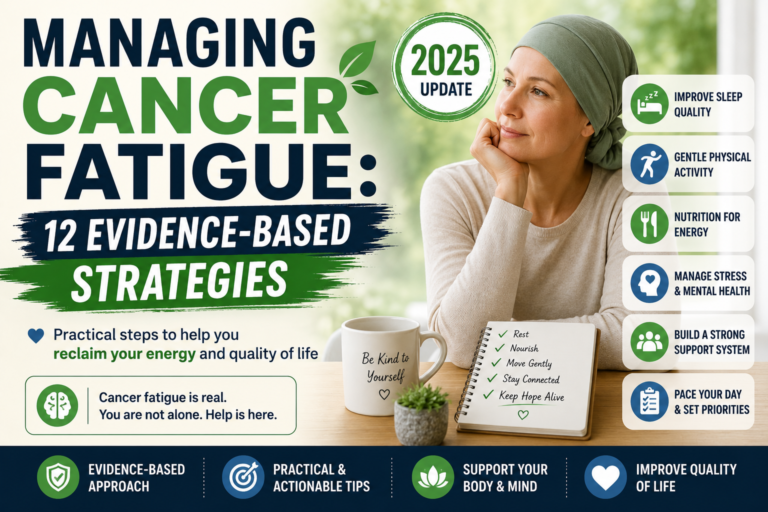
Cancer-related fatigue is the most commonly reported side effect of cancer treatment — and one of the most persistent. Unlike normal tiredness, cancer fatigue does not reliably improve with rest and can continue for months or years after treatment ends. This guide covers the evidence-based strategies that research shows actually help cancer survivors manage fatigue and gradually restore their energy.
Disclaimer: This content is for informational purposes only. Always follow your oncologist’s guidance for your specific situation.
Why Cancer Fatigue is Different
Cancer-related fatigue has multiple contributing causes including the physical effects of treatment on the body, anemia, hormonal changes, disrupted sleep, depression and anxiety, deconditioning from reduced activity during treatment, and in some cases ongoing inflammation. Because the causes are multiple and interconnected, no single intervention addresses all of them — an integrated approach works best.
Strategy 1 — Gentle Exercise (Counterintuitive but Effective)
Multiple studies show that regular gentle exercise is one of the most effective interventions for cancer-related fatigue — more effective than rest. This seems counterintuitive but makes biological sense. Exercise improves cardiovascular function, reduces inflammation, improves sleep quality, and counteracts the deconditioning that occurs during treatment. Start with 10 to 15 minutes of gentle walking daily and increase gradually as tolerated. Always consult your oncology team before starting any exercise program.
Strategy 2 — Sleep Hygiene Optimization
Cancer treatment frequently disrupts normal sleep patterns. Improving sleep hygiene — consistent sleep and wake times, limiting screen time before bed, keeping the bedroom cool and dark, limiting caffeine after noon — can significantly improve sleep quality and therefore daytime energy. If sleep problems are severe, ask your oncologist about a referral to a sleep specialist.
Strategy 3 — Energy Conservation
Learning to pace your activities and conserve energy for the things that matter most is a practical skill for managing fatigue. Prioritize activities by importance, schedule demanding tasks during your peak energy time of day, build rest periods into your day before you feel exhausted, and accept help from others for tasks that drain your energy without providing meaning.
Strategy 4 — Address Contributing Factors
Have your oncologist check for anemia, thyroid dysfunction, depression, and nutritional deficiencies — all of which contribute to fatigue and all of which have specific treatments. Managing depression and anxiety through therapy or medication often produces significant improvement in fatigue. Nutritional optimization with adequate protein and hydration supports recovery.
Conclusion
Managing cancer fatigue after treatment requires patience, self-compassion, and a multi-strategy approach. Gentle exercise, sleep optimization, energy conservation, and addressing contributing medical factors together provide the best outcomes. Recovery from cancer fatigue is possible — most survivors see gradual improvement over months to years with the right support and strategies.